Jennifer Kelly shares breast cancer journey
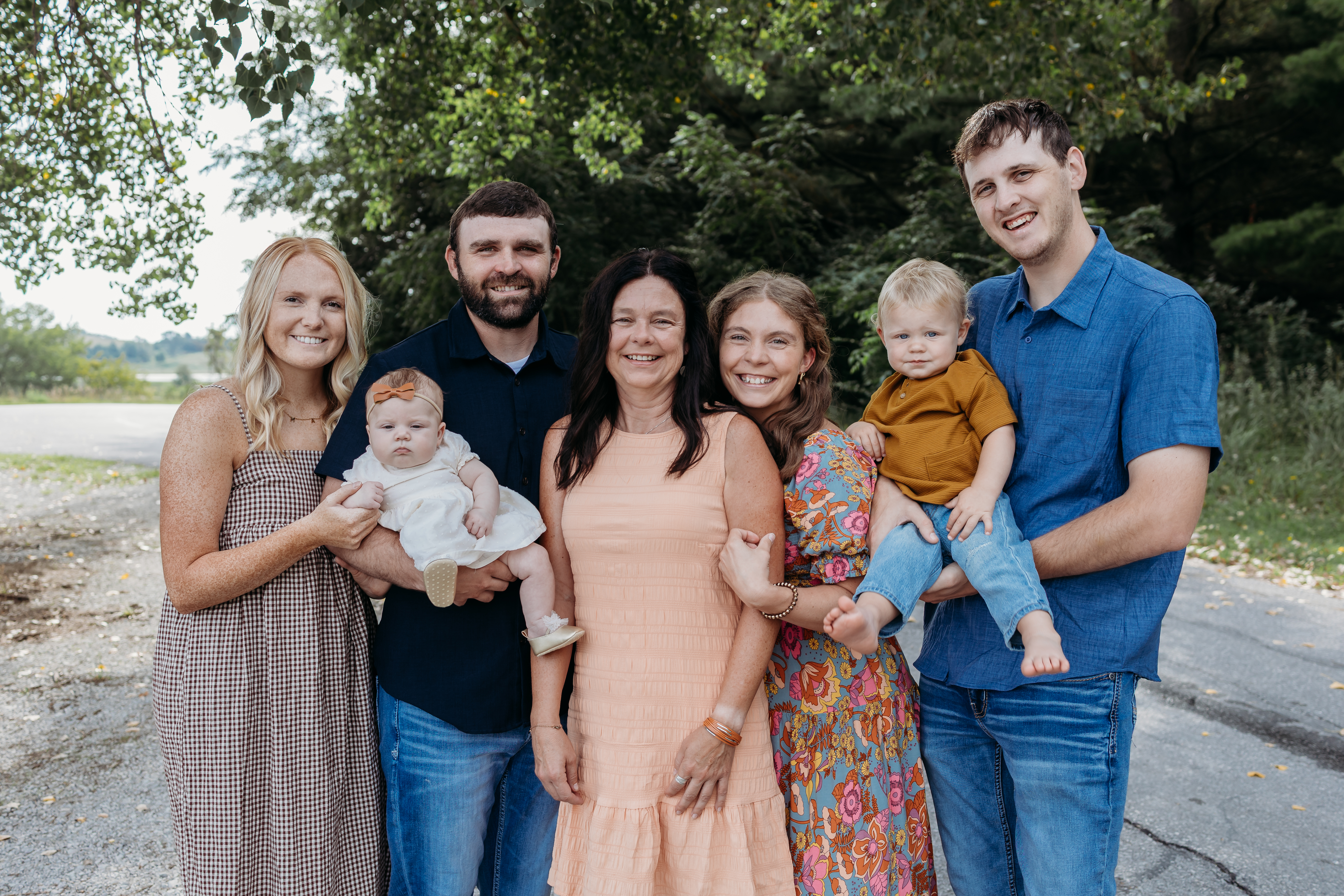
Jennifer Kelly (center) and family
HARLAN — Jennifer Kelly knows firsthand how easy it can be to put off a mammogram when life gets busy. After finding a lump in her left breast in August of last year, she initially believed it was another cyst. Months of uncertainty, testing and treatment would soon change her perspective on life and the importance of early detection.
Kelly had previously experienced three breast cysts, each of which had been drained and tested with no concerning results. When she discovered another lump, she assumed it was the same thing.
“As the days went by, it felt different. I can’t explain why, I just knew,” Kelly recalled.
Despite her concerns, Kelly postponed her annual mammogram. Life was busy, and she struggled with the thought of facing a possible cancer diagnosis.
Finally, at the end of September, she scheduled an appointment for Oct. 6, a date she remembers clearly because it is her son’s birthday.
The mammogram revealed abnormal calcifications. Because Kelly has dense breasts, being called back for additional testing was not unusual. She went in for an ultrasound the following day, but the medical team recommended an immediate biopsy. Four samples were taken.
“By the way the radiologist and technician were talking, I could tell this was serious, and I was scared,” she said.
A week later, Dr. Flores called to tell Kelly she was being referred to Methodist Estabrook Cancer Center.
“My first thought was, no, this can’t be right. I eat well, I exercise, I do everything I’m supposed to. How am I going to tell my kids and family? I truly didn’t think I was strong enough to handle it,” Kelly said.
A new perspective on life
A cancer diagnosis brought a wave of emotions and forced Kelly to reconsider what matters most.
“There’s a line I came across that I now live by. ‘You can’t give life more time, so give the time you have more life,’” she said. “Cancer makes you want to spend more time with the people you love, and it humbles you. You realize how much you took for granted, your health most of all.”
The early days following her diagnosis were an emotional roller coaster. Kelly worried about missing work for appointments, undergoing surgery, chemotherapy and radiation, and losing her hair. She also faced the difficult decision of having a bilateral mastectomy.
Before her diagnosis, Kelly had thought about how she might respond if she ever developed breast cancer, believing she would simply choose to have her breasts removed. Experiencing the diagnosis firsthand changed that perspective.
“Until it happens to you, you don’t realize what a big decision it is,” she said. “They become a part of you.”
She also worried about letting others down and wondered whether she would live to see her grandchildren graduate, get married and have children of their own. The number of tests and appointments added another layer of stress as she tried to balance her health with everyday responsibilities.
Several things helped Kelly cope during those difficult months. She continued her walking routine, stayed busy and talked with people who had experienced cancer themselves.
“Getting outside and moving helped me stay steady,” she said.
Her sister, Mandy, was another constant source of strength, accompanying her to appointments and helping her understand the information provided by her medical team.
“I used to say I didn’t have time for things. Now I know better,” Kelly said.
Family, friends and community offer support
For Kelly, the support of family, friends and coworkers made a lasting difference throughout her cancer journey.
When she first told her sister, Mandy, about the diagnosis, Mandy responded with reassurance.
“‘We’ll get through this together and beat it.’ She was right,” Kelly recalled.
Mandy attended Kelly’s first appointment alongside her niece, Dreyleigh, and her son, Broghan. From that point forward, Mandy accompanied her to appointments, took notes and helped communicate next steps to the rest of the family.
Kelly’s coworkers also stepped up to help. Her team organized a collection to assist with gas and meal expenses and put together a care package. They even offered to arrange a meal train, although Kelly admits she initially resisted the idea.
“They wanted to organize a meal train, but I’m stubborn, and I told them I appreciated it, but I’m just one person and I’d be fine,” she said. “I’m still grateful they offered.”
Her family was there for her bilateral mastectomy, and the night after surgery, her sister and niece, Dilynn, stayed overnight with her.
“It ended up being a fun night, which is not something I expected to say about the night after surgery,” Kelly said.
During recovery, Mandy helped with meals, showering and caring for surgical drains, taking care of the many tasks Kelly could not manage on her own. Kelly also spent considerable time with the Eggerss family throughout those months.
Her aunt, Charlotte, regularly checked in to see how Kelly was feeling and what the next steps in treatment would be.
Even the routine of medical appointments became something Kelly and her sister came to appreciate.
“Now that the majority of the appointments are over, Mandy and I admit we kind of miss the appointments,” Kelly said. “Not the appointments themselves, but the time we got to spend together.”
Kelly encourages people to reach out to anyone facing cancer, even if that person is usually private or reluctant to ask for help.
She said classmates, former coworkers and others contacted her simply to let her know they were thinking of her and available if she needed anything.
Those messages, she said, were meaningful reminders that she was not facing the journey alone.
Early detection can make a difference
One of Kelly’s strongest messages is simple. Do not ignore a suspicious lump or postpone recommended screening.
“If you feel something suspicious, don’t wait. That goes for men and women both. Early detection is key,” she said.
Kelly knows how easy it is to put off an appointment when other responsibilities seem more urgent. She felt the lump in August but did not schedule her mammogram until the end of September.
“Please don’t do what I did,” she said. “Nothing on your to-do list is more important than this.”
She encourages anyone who notices a change or feels that something is not right to contact a health care provider and get checked.
“If something feels off, trust that feeling, call your doctor, and get checked,” Kelly said. “The worst case is that it’s nothing and you get to breathe again.”
Advice for others facing a diagnosis
For women who have recently been diagnosed with breast cancer, Kelly recommends talking with others who have gone through the experience.
Her grandmother, Cindy; a coworker; and a neighbor had all experienced breast cancer, but each had a different journey. Hearing their stories helped Kelly understand that her fears and concerns were normal.
“It helped me so much to sit down with them and hear that they’d had the same worries I did,” she said. “Sometimes I felt like my concerns were silly or not worth bringing up, and they showed me they weren’t.”
She also encourages patients to ask their doctors questions, even if the questions seem minor, and to bring someone along to appointments to take notes.
“There is so much information in those appointments with your surgical oncologist,” Kelly said, adding that she was grateful for the care she received from the team at Methodist Estabrook Cancer Center.
Kelly also emphasizes the importance of knowing one’s family medical history before meeting with a cancer specialist.
She recommends documenting relatives who have had cancer, including the type of cancer and their ages at diagnosis. She learned during her own experience that her maternal grandmother had ovarian cancer, information she had not previously known.
Family history involving male relatives should also be included, she said, because certain cancers beyond breast cancer can affect a person’s breast cancer risk.
Looking ahead with hope
Today, Kelly is looking forward to spending more time with her children, grandchildren and extended family. She also hopes to begin checking more items off her bucket list.
Her experience has taught her not to take her health, time or relationships for granted. The encouragement she received from loved ones and others who understood what she was experiencing helped her find strength during an uncertain time.
For those supporting someone with cancer, Kelly’s advice is to reach out, offer help and let the person know they are not alone. For those facing a diagnosis themselves, she encourages asking questions and seeking support from people who understand.
As Kelly continues looking toward the future, she holds on to this reminder, “Always remember, ‘First of the Month Feels’ and take it one day at a time.”